
045 | A Life Without Notifications
Redefining Luxury Through Attention

Who owns you?
I’m lost in thought, with a pen, looking for my next line.
At the same time, my phone began to chime.
I dropped my quest. I just had to see this notification calling out to me.
Each time my phone vibrates, or makes a sound, it is a call to my arms.
Phone unlocked.
I am bound.
I can’t be found. I’m down the rabbit hole.
My attention is stolen. I am no longer in control.
Life gets boxed by the sheen of this routine.
It passes me by in between hits of dopamine.
The world is unseen, for I am glued to my screen.
It says - “Welcome my son, welcome to the machine.”
On each unlock, something new to do.
No wonder my phone is far more appealing than you.
What did you say? Get lost. Let me be.
You see this phone I own? Now it owns me.
If Eric Cartman was a Professor
I spent four years from 2000 to 2004 studying for my engineering degree. I majored in Electronics and Communication.
For the most part, I tried understanding what was being taught. There were times I couldn’t. Some teachers didn’t design their methods in a manner that made it easy for me. No blame. I don’t think I applied myself equally in all classes.
For instance, we had a professor who showed up and ONLY dictated notes for the entire duration of the class. He just read stuff out, expected us to write and when the class ended, we put our pens down.
I encountered him across different semesters.
In the first semester when he taught us, I had stood up and protested after three classes of dictation. I said that if he keeps dictating, we won’t understand concepts or have the space to ask questions.
He felt personally attacked.
So he chose to attack me.
“What is your name you insolent young man? What nonsense are you saying? Who do you think you are some European fellow? Shut up and sit down.”
It was as if Eric Cartman had grown 5ft tall, gotten a dark chocolate coloured tan and was an electronics engineering teacher in Mysore.
I checked out of his classes after that. Self-study was the way to go.
I showed up merely for the sake of attendance. Eventually, I began to write down everything he said. I did it diligently by sitting in the front bench.
I’d smile and nod and bow to him with mild deference. I took to heart the words of Dwayne “The Rock” Johnson. The ones where he said - “Know your role, and shut your damn mouth.”
I began playing a game.
The game was to write as much as possible in as little space as possible. I needed to get a good pen so the ink wouldn’t smudge. I’d sometimes slow him down intentionally by asking him to repeat after every fifth sentence or so to see if he’d get annoyed.
He did, but not as much as if I would’ve questioned his authority or shown irreverence.
I no longer have those notes with me, but if I remember correctly, I finished an entire semester of his classes by filling up only six pages of an A4 sized notebook.
Mad props to this Prof, I say.
He might not have taught me anything about Capacitance or Microwaves, though in his defence he did teach me how delightful handwritten journaling can be.
Microprocessor Architecture
If I had good teachers and I could grasp what they taught, the stuff I learnt got cemented in my mind for life.
Microprocessor architecture is one such.
Fret not gentle reader, for this essay isn’t about microprocessors.
As fascinating as they might be to me, I am aware that bringing you along on the journey to appreciate this chip that has altered the course of humanity requires taking you through so much specific knowledge that I will end up writing an explainer that seems like a chapter in a textbook.
That’s not my intention here.
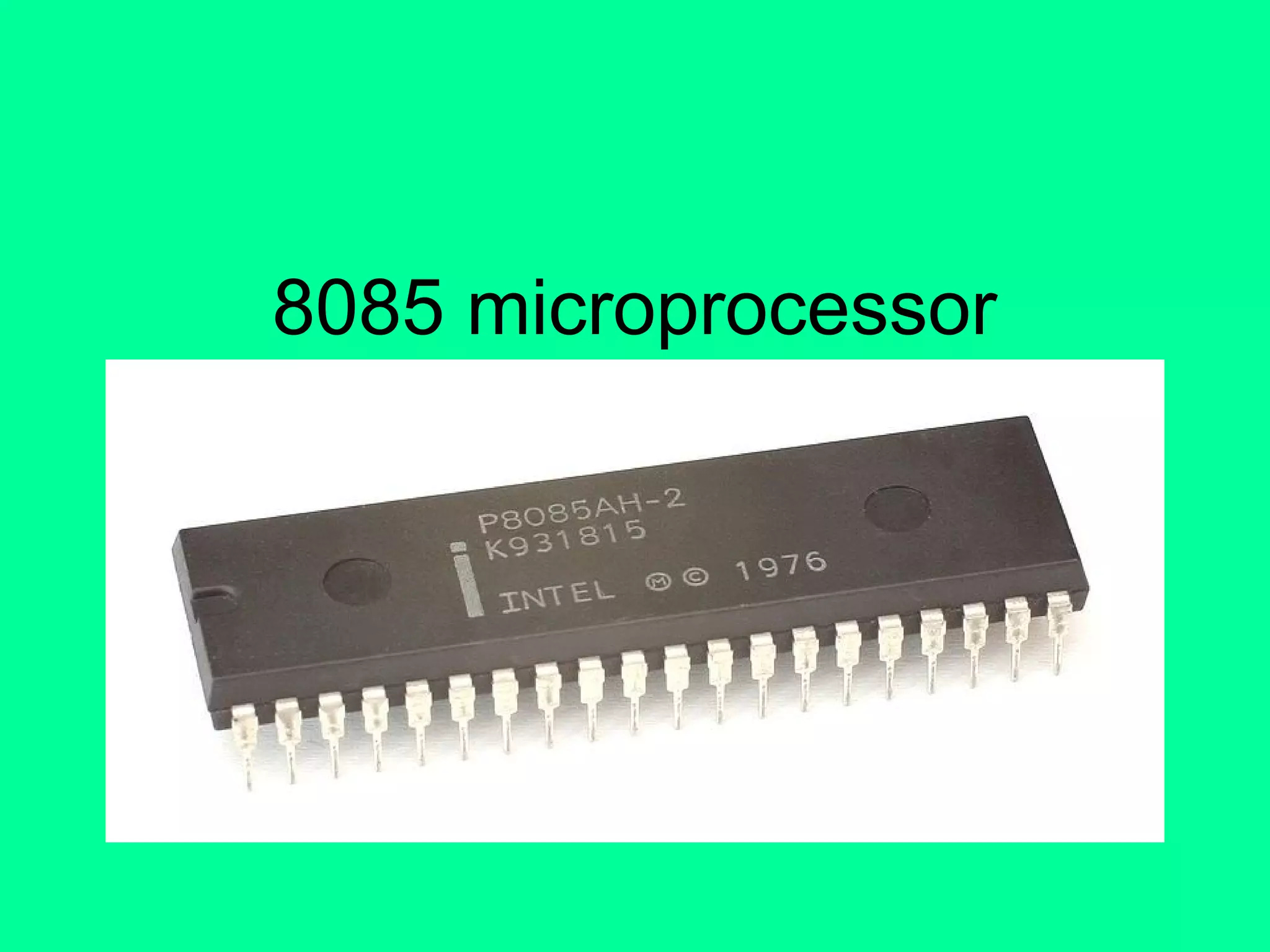
By default, Microprocessors are expected to run programs. These programs are written in a language called Assembly language. Writing programs in Assembly is fun now that I don’t have to do it for grades.
Assembly language is the opposite of an LLM interaction. In case of an LLM, you interact with a device in your own natural language.
In case of Assembly, you had to write hexadecimal code in the computer’s language.
The 8085 chip is so cool that it has been used in printers, scanners, disk drives, washing machines, fridges and microwave ovens.
Each chip has forty pins, twenty on each side.
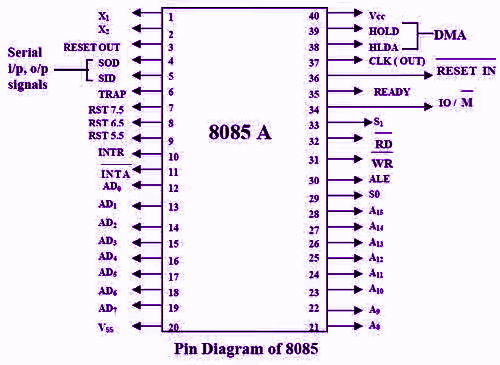
Five of those pins are called Interrupt pins. If you look at a diagram explaining what each pin does you will see that these interrupt pins are named TRAP, RST 7.5, RST 6.5, RST 5.5 and INTR.
TRAP is a non-maskable interrupt, while the others are maskable interrupts.
A non-maskable interrupt refers to the idea that a signal that comes to the TRAP pin can’t be ignored. Cannot be masked. It needs to be listened to and the signal needs to be processed by interrupting regular programming.
The other four Interrupt pins - RST 7.5, RST 6.5, RST 5.5 and INTR can be masked or ignored by the Microprocessor if that’s what the programmer wants.
40 pins in a Microprocessor designed in the 1970s. Only one pin powerful enough to override regular programming. To stop the default state of the Microprocessor.
What are your interrupts?
I hope you see where I’m going with Microprocessor design and interrupt pins.
For the last three years, my phone has been in greyscale mode. I switch it to colour only when looking at photos, or if I am using maps to go from one place to another, because route options are shown in different colours.
All notifications have been disabled by default.
There are exceptions:
Regular phone calls
Whatsapp audio and video calls
SMS
Whatsapp messages from a curated group of people not in archive (most messages sit in the archive section)
Calendar (for reminders)
Notifications from banking apps / online wallets
Despite intensely regulating my phone usage, and nagging friends when we hang out if I see them on their phones instead of being present, I find it challenging to stop myself from doomscrolling.
Prior to this, I treated every notification as a non-maskable interrupt.
Work emails showed up 24/7. I paid attention to them and responded as soon as I could. Even if I didn’t, my brain would allocate space to compose replies, and a part of me would have an open browser tab in my mind, reminding myself on a Saturday afternoon walk in the park of things that I needed to put in bullet points so that my boss could read them on Monday.
It felt good to stay on top of things. So much so that I’d start scrolling through my inbox as soon as I woke up, even on the weekends.
I feel bad for past Hari for that reason (one of many), and recognise that he had to go through all of that so that I can understand why I don’t like notifications that much.
My lock screen no longer shows any notifications.
When I see strangers around me on their phones, I can’t help but take a peek at the huge volume of notifications that they scroll through even before they’ve unlocked their device.
Attention is stolen. We’re no longer in control.
Gravity and Grace

French Philosopher Simone Weil was born in 1909 and died in 1943. She lived for 34 years.
In that short life, she became a teacher. Devoted her life to political activism. She even worked for a year as a labourer in car manufacturing factories to understand the working class way of life.
She worked with the Free French government in exile in Britain just before she died. She had tried convincing Charles de Gaulle to have a contingent of nurses, (herself included) parachute into Nazi-occupied France not just to save lives and provide medical attention, but also to serve as a moral opposition to the Nazis.
When she was alive, she was known among a small circle of people who were involved in academics, politics and activism.
It is only after she passed away that the ideas from her notebooks and diaries were studied and published.
She left her notes and diaries with her friend, Gustave Thibon who curated her ideas in a book, Gravity and Grace.1
If you are curious about Simone Weil, check out one of my favourite essays2 by Maria Popova of The Marginalian, where she writes about Attention and Grace. (The short essay contains multiple links that might lead you down delightful rabbitholes.)
Some of Weil’s ideas seemed radical at first glance, but with enough attention and scrutiny, they started to feel right (to me).
On Love
Love is pure when joy and suffering inspire an EQUAL degree of gratitude.
If someone is happy, love is when they wish to share the suffering of their beloved who is unhappy.
If someone is unhappy, love is when they are filled with joy by the mere knowledge that their beloved is happy, without sharing in this happiness or even willing to do so.
Among human beings, only the existence of those we love is fully recognised.
On Attention
Extreme attention unlocks the creative faculty in humans, and the amount of creative genius in any period is strictly in proportion to the amount of attention paid at that period.
Attention alone, so full, that the “I” disappears is required of me.
Attention, taken to its highest degree is the same thing as prayer.
In Sum
This essay started off with imagining if Cartman was a teacher, went onto Microprocessor architecture and ended with a few pearls of insight from Simone Weil.
I can’t make you do anything you don’t want to, though I hope this essay has prompted you to rethink your relationship with your devices, and to tune into the beauty that our world has to offer when you engage with it by being fully present.
By being fully attentive.
Gentle Reader, thank you for paying attention. I don’t take it for granted.
Simone Weil on Attention and Grace, published in 2015 in The Marginalian by Maria Popova
A bit meta. I read your post on a device.
Great read, Hari. Keep it up, Sir!